Vitalik Buterin Calls for Chips That Wallet Auditors Can Verify
Vitalik Buterin argues that open chip layouts could give hardware wallet auditors a reference for checking manufactured devices. Physical verification would still require specialist work.
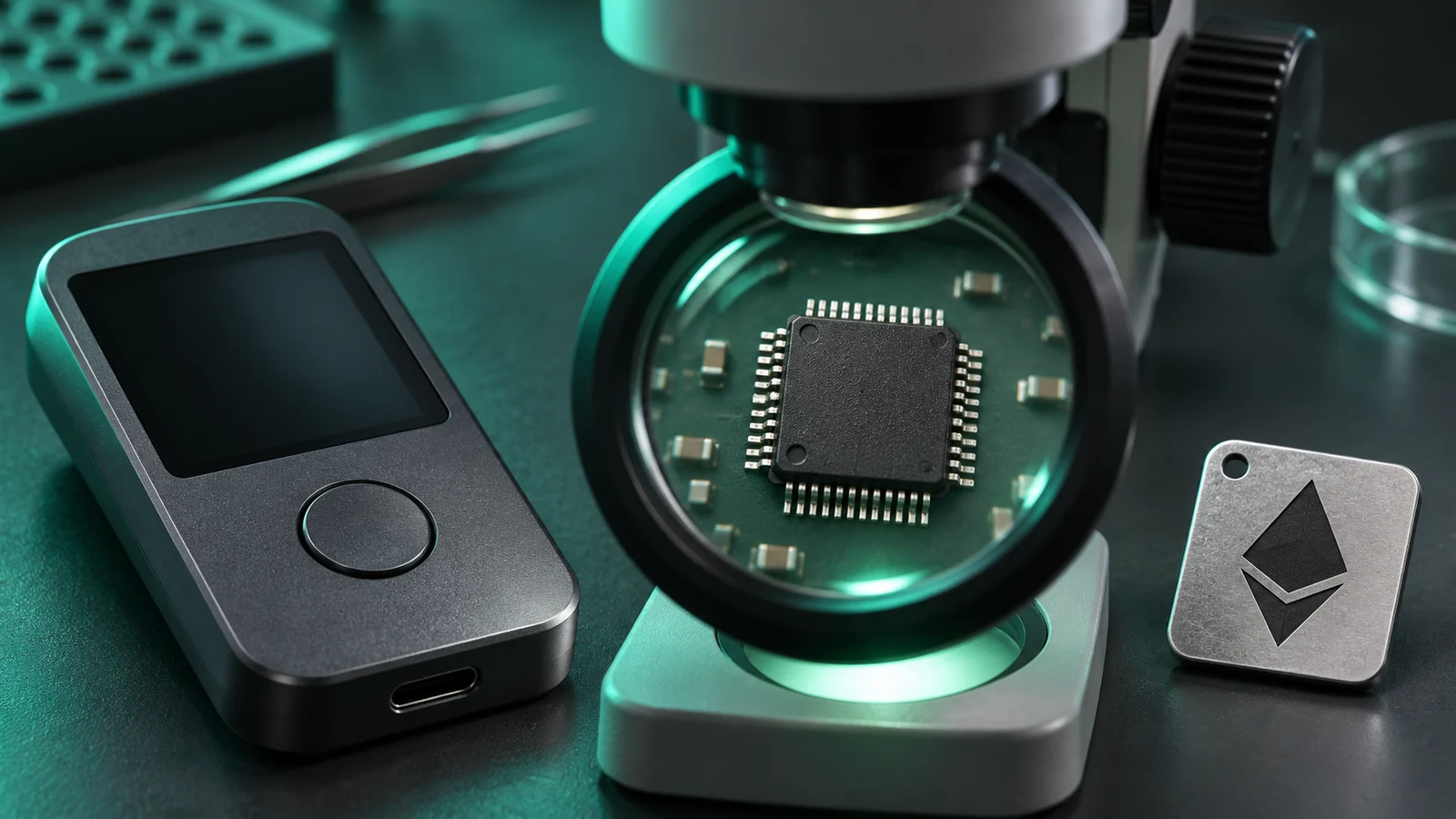
Ethereum co-founder Vitalik Buterin called for chip designs that independent specialists can compare with manufactured silicon, arguing that wallet security depends in part on hardware users rarely get to inspect. His November 26 essay draws a distinction that matters for anyone evaluating a signing device: being able to read its software tells only part of the story about the physical device running it.
Buterin’s proposal is an argument for giving outside examiners more evidence. It does not introduce a wallet certification scheme or require a change to Ethereum. Nor does the essay establish that any particular wallet currently on sale has been modified.
What an open chip layout would add
Software can be published as readable source code, allowing others to study what it is intended to do. Chip design documentation can also describe how a circuit is supposed to behave. But a manufacturing layout answers a different question: where the components and connections are physically supposed to be. Buterin argues that these lower-level details are often missing even when hardware is described as open.
That gap matters when an auditor wants to examine a physical sample. A layout could give the auditor a reference to compare against what they observe. Without one, identifying a visible difference is harder, and interpreting it is harder still. Not every deviation would establish malicious interference: the essay also describes adjustments made in preparing a layout for fabrication.
Open documentation would also need to match the version of the chip being examined. A published design for one revision would have limited value for inspecting a different revision. In practice, the useful evidence would include both a sufficiently detailed reference and a clear account of which hardware it describes.
Why wallet users should care
Hardware wallets are intended to keep sensitive key operations on a dedicated device. Users still depend on the device performing those operations as designed. Cointelegraph’s coverage connects Buterin’s argument to reported cases of tampered hardware wallets and notes that he raised the prospect of changes that would be difficult to spot by eye.
Physical integrity and transaction integrity are separate questions. A device could come from its intended supply chain and still display a request a user should reject. Conversely, a familiar interface does not prove that the hardware underneath matches its documentation. GhostSwap’s reporting on recruitment fraud and signing access describes a different part of the problem: what people are induced to approve. Better chip evidence would not remove that risk.
What independent verification could establish
Buterin expects physical inspection to remain specialist work even if more designs are published. It takes equipment and expertise to inspect silicon, and conclusions depend on what was tested and how. Evidence from one inspected sample would not establish the condition of every unit passing through a distributor. It would still give outsiders a more concrete claim to examine than a general statement that the device is open.
The distinction between a promised safeguard and the evidence supporting it also comes up in GhostSwap’s coverage of Keplr’s account recovery update. That case concerns software and recovery rather than semiconductor inspection, but it illustrates why a security claim should identify the part of the system it covers.
For wallet makers considering Buterin’s proposal, a meaningful next step would be publishing enough design information for an independent examiner to compare with a named production revision, together with the scope and limits of any inspection. A buyer could then distinguish what the manufacturer says it built from what someone outside the manufacturer actually checked.