RLUSD Launches on Coinbase Across Three Networks
Coinbase adds RLUSD on XRP Ledger, Base and Ethereum. Here is what the October 28 launch changes—and which transfer limits still matter.

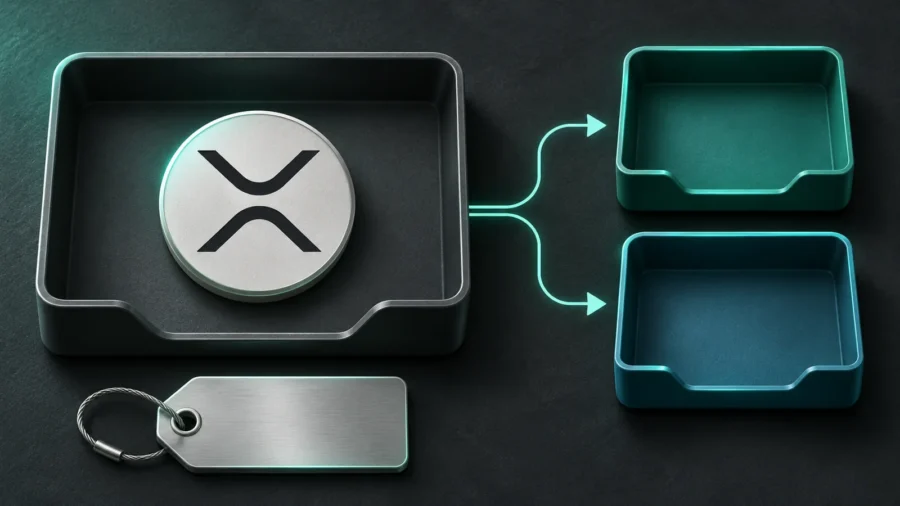
Coinbase has added Ripple USD (RLUSD) across its retail and institutional platforms, giving the dollar stablecoin another route into exchange accounts. The October 28, 2026 launch includes deposits and withdrawals on XRP Ledger, Base and Ethereum. For people comparing stablecoin transfer routes, that expands the available options while leaving a familiar constraint intact: the asset name alone does not identify the network a destination supports.
What is available at launch
In its October 28 announcement, Ripple said customers can trade and manage RLUSD through Coinbase Prime, Coinbase Exchange and the Coinbase Retail app. The announcement describes one-to-one conversion from U.S. dollars and other supported dollar-denominated stablecoins into RLUSD. Ripple also said it would provide liquidity on Base.
Coinbase’s own launch notice confirms the three supported networks and dollar conversion, while specifying customers in supported regions. Both companies separate that launch from a later step: access for Coinbase Global Exchange customers, including use of RLUSD as collateral, is still to follow. The announcements do not supply a date for that expansion.
That distinction matters for evaluating the news. A spot-market listing, an institutional account integration and permission to use an asset as derivatives collateral are different capabilities. The first two do not establish that the third is already available.
Three networks do not make every route interchangeable
The practical change is more choice at the exchange boundary. It is not evidence that an RLUSD balance can be sent over any chain to any wallet that displays the same ticker. A route has at least two compatibility questions: which asset is supported, and on which network it is supported.
Coinbase’s multiple-network guidance says available networks appear during sending or receiving, and warns that using an incorrect network can result in lost funds. The same page says multiple-network support is unavailable in New York. That general restriction is another reason to distinguish an announced platform launch from availability for a particular account.
Consider an exchange account offering RLUSD on Base and an external service accepting RLUSD only on Ethereum. Those descriptions refer to different delivery routes despite the identical ticker. The new listing alone does not resolve the mismatch or establish an automatic bridge between them. GhostSwap’s earlier coverage of network routes and regional limits in swaps explains why those details belong alongside the headline asset list.
Dollar backing addresses a different question
Ripple’s RLUSD product documentation describes the token as dollar-backed, with cash, U.S. Treasuries and cash equivalents supporting reserves, and points to independent monthly attestations. It also distinguishes RLUSD from XRP: one is a reserve-backed stablecoin, while the other is the XRP Ledger’s native cryptocurrency.
Reserve information concerns the issuer’s backing and redemption arrangements. It does not establish that every external wallet, exchange or payment service supports a specific token route. Likewise, the announced one-to-one conversion is not a blanket promise that every transfer or conversion path has no charges. The launch notices do not provide a complete account-by-account fee schedule.
Distribution is the change to watch
This announcement concerns exchange access, rather than another reserve-custody arrangement. Yesterday’s BNY and Ripple custody development addressed a different part of the infrastructure. Keeping the two separate makes it easier to see what each announcement actually changes.
The useful test for the Coinbase launch is whether the named platforms and supported account regions expose the promised asset and network options. Broader distribution may reduce friction for users already operating on those routes; it does not eliminate destination compatibility, account restrictions or the distinction between an exchange conversion and an on-chain transfer. Global Exchange collateral support remains a future development, rather than a feature this launch has already delivered.