NEAR Mobile Details Gasless Swaps: What Fees Remain
NEAR Mobile’s November 4 update explains sponsored relayer fees. Here is what gasless swaps change—and what still needs checking.
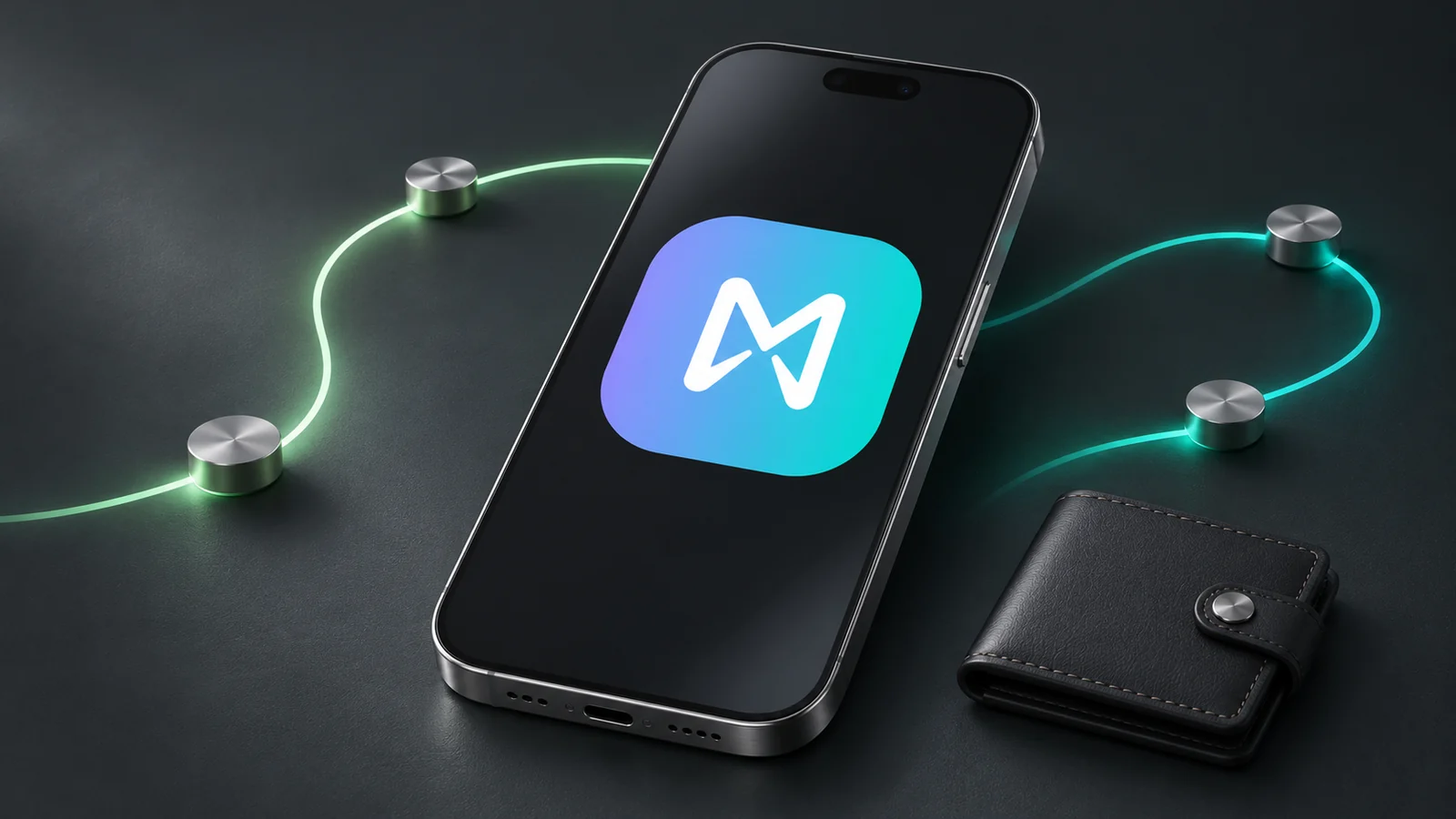
NEAR Mobile says its version 4.0.0 wallet sponsors relayer fees for supported cross-chain transactions, reducing the need to keep a separate gas-token balance on every network. The company set out the feature in a November 4, 2026 announcement covering its mobile wallet and NEAR Intents integration.
For someone holding assets across several chains, that could remove an awkward extra step: obtaining a small amount of a network’s native coin solely to complete a supported action. It does not establish that every transfer is free, every asset pair is available or every destination can accept the result.
What the announcement actually changes
The release associates sponsored relayer fees with version 4.0.0 and describes support for more than 120 assets across over 35 blockchains. Those are the company’s stated coverage figures, rather than an independent test of every route. The wallet is available on iOS and Android and presents supported balances from multiple networks through one interface.
The date needs care. November 4 is the date of this announcement, not a verified first day of gasless availability. NEAR Mobile’s cross-chain swap documentation, marked updated September 28, already described sponsored relayer fees. The new release provides a current account of the product; it does not establish that all of its features became available today.
Gas sponsorship is narrower than a free swap
A relayer submits supported transactions on a user’s behalf. NEAR Mobile says it covers the relevant relayer charges, so eligible actions do not require users to maintain native gas tokens separately. The underlying blockchain execution still has a cost. Sponsorship changes who handles that particular charge.
Other costs can remain. The NEAR Intents fee documentation separates protocol charges, distribution-channel fees and fees associated with particular execution arrangements. It also explains that integrations can add application fees. Its different schedules should not be read as one universal price for every NEAR Mobile swap.
The practical comparison is therefore the amount delivered for the amount given up, with the same asset and destination network held constant. A route without a separate gas payment can still produce a different net result from another quote. The absence of a gas-token top-up is useful convenience; it is not proof of the cheapest execution.
One balance does not erase network differences
NEAR Mobile describes an interface that can combine supported liquidity held across networks and use NEAR Intents to coordinate execution. Users need not operate a separate bridge manually for supported swaps. The documentation explicitly says cross-chain infrastructure remains underneath the simpler interface, and execution time depends on the route and network conditions.
For example, a single displayed stablecoin balance does not mean an exchange accepts that stablecoin on every chain. The receiving network and asset must still match the destination’s requirements. GhostSwap’s report on RLUSD’s three-network Coinbase launch illustrates why the network label remains important even when the token name is unchanged.
Where the remaining boundaries sit
The separate NEAR Mobile Swap web-interface terms, dated February 2026, describe possible network, protocol and service fees, and warn about slippage, smart-contract and third-party infrastructure risks. They do not guarantee immediate settlement or best execution. These are terms for that web service, not evidence that every mobile feature follows an identical fee schedule.
The distinction matters when evaluating the announcement: a smoother wallet interface cannot by itself prove the reliability of every underlying dependency. Neither a list of supported chains nor self-custody resolves whether a specific route is currently usable in a particular jurisdiction. As GhostSwap’s coverage of Mercuryo’s regional restrictions shows, product availability and token coverage are separate questions.
NEAR Mobile’s update addresses a concrete usability problem: the fragmented gas balances that can interrupt a cross-chain transaction. Its value is easier to judge when that improvement is kept precise. Sponsored relayer fees simplify supported actions; the actual quote, receiving network and execution conditions still determine what a transfer delivers.