SoFiUSD Goes Live on Polygon’s Payments Network
SoFiUSD went live on Polygon on November 12, adding another payment route for the bank-issued stablecoin. App access and deposit protection remain separate.
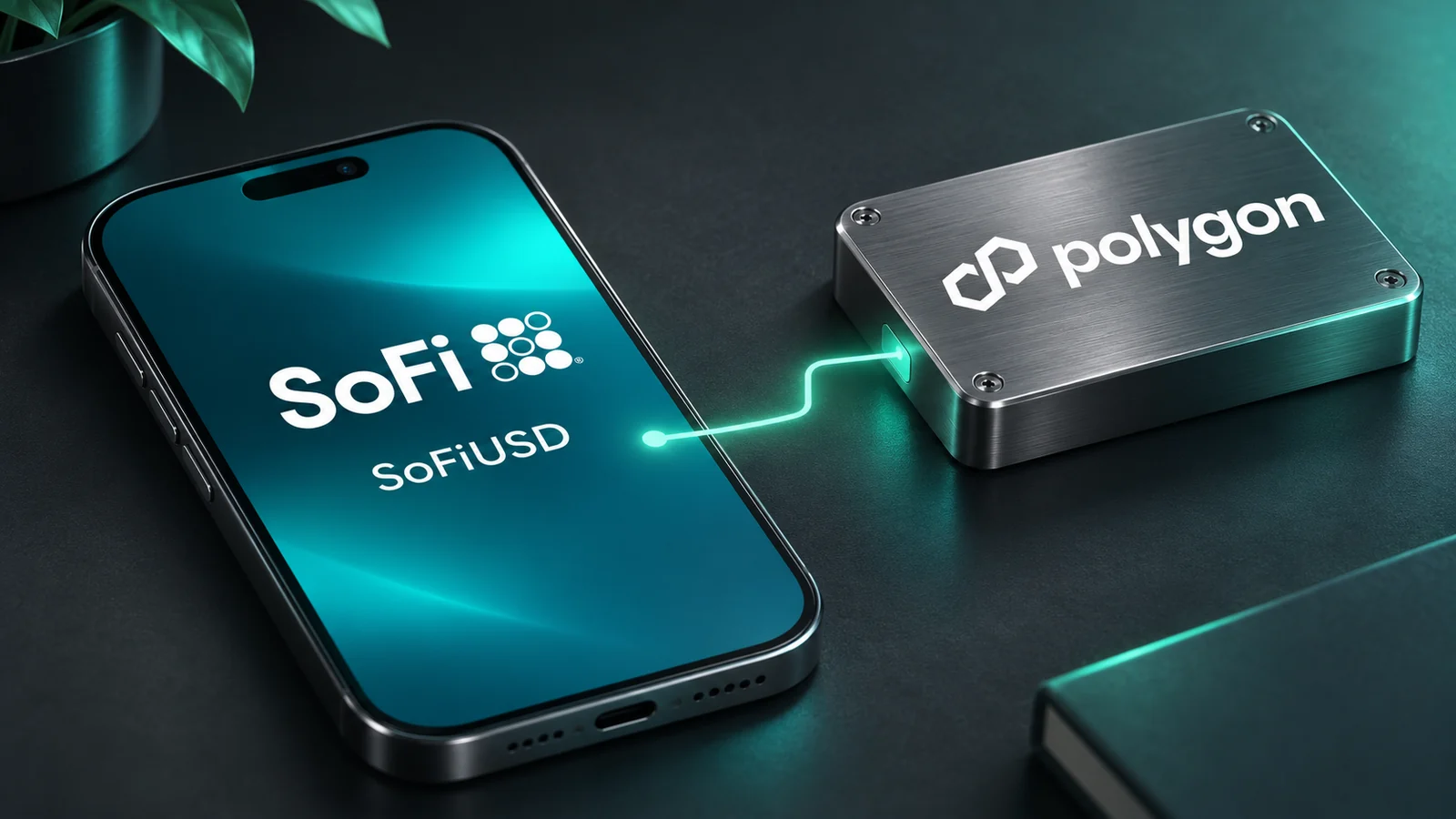
SoFiUSD went live on Polygon on November 12, 2026, adding a third blockchain to the bank-issued dollar stablecoin’s existing Ethereum and Solana support. Polygon Labs announced that SoFi members can buy, sell, hold and convert the token in the SoFi app. The launch also adds SoFiUSD to Polygon Open Money Stack, a set of services for businesses building payment products.
The expansion gives the same dollar-denominated token another network on which to operate. For a person using SoFi, that matters when the app and the intended destination both support the relevant route. For a payment provider, it matters when an existing Polygon integration can accommodate another settlement asset.
What changes in the SoFi app
SoFi first announced app access to its stablecoin in its May 27 release, which listed Ethereum and Solana. The November change is Polygon availability, rather than the first time members can hold SoFiUSD in the app. Polygon says members can use the new integration without setting up a separate wallet.
Holding or converting a balance inside an app is a different capability from delivering that balance to an outside wallet or a recipient in another country. Polygon describes wider cross-border uses as planned. Its launch post does not provide an exhaustive list of external destinations, transfer limits, fees or countries for every member.
That distinction matters even where addresses on two networks look alike. An exchange or wallet that accepts a token on one network may not credit it on another. GhostSwap’s coverage of RLUSD’s rollout across three Coinbase networks illustrates why the receiving platform’s network support is as important as the token name.
Where the new settlement option fits
The Block reported that SoFiUSD joins USDC, USDT and PYUSD on Polygon Open Money Stack. The platform combines tools for wallets, fiat access, conversion, routing and settlement. The addition gives businesses building on that infrastructure another asset to consider when they design a payment flow.
Consider a provider that receives a stablecoin and pays a supplier in local currency. The blockchain transfer is one part of the job. The provider still needs to identify who paid, decide how and when to convert the balance, and confirm the supplier received the payout. Adding a settlement asset does not answer those questions or establish that the payout is cheaper or faster in every market.
It is also a different change from Polygon adding Solana to its payments stack in October. That expansion added support for another network to the payment tools. This launch adds a specific stablecoin to the assets available through those tools.
A bank-issued token is separate from a bank deposit
SoFi Bank describes SoFiUSD as redeemable one-to-one for U.S. dollars and says it holds liquid assets to support outstanding tokens. The issuer’s disclosure also says SoFiUSD is a payment stablecoin, not a deposit, and that FDIC and SIPC insurance do not cover the token. Redemption terms and eligibility are distinct from what any third-party market or app will offer.
Polygon’s announcement discusses eligible members converting SoFiUSD into separate interest-bearing tokenized deposits. Any applicable deposit insurance concerns the underlying deposit account, subject to its terms. A token held in a banking app does not acquire that protection merely because the same bank issues it.
Polygon support therefore adds a concrete option for the asset today. What a member or business can do with that option still depends on the app, the receiving network and the terms of the particular payment route.