DBS and Circle Announce Round-the-Clock USDC Minting and Redemption
DBS and Circle announced 24/7 dollar-to-USDC settlement for eligible institutional clients. The arrangement gives them an alternative to trading on exchanges.
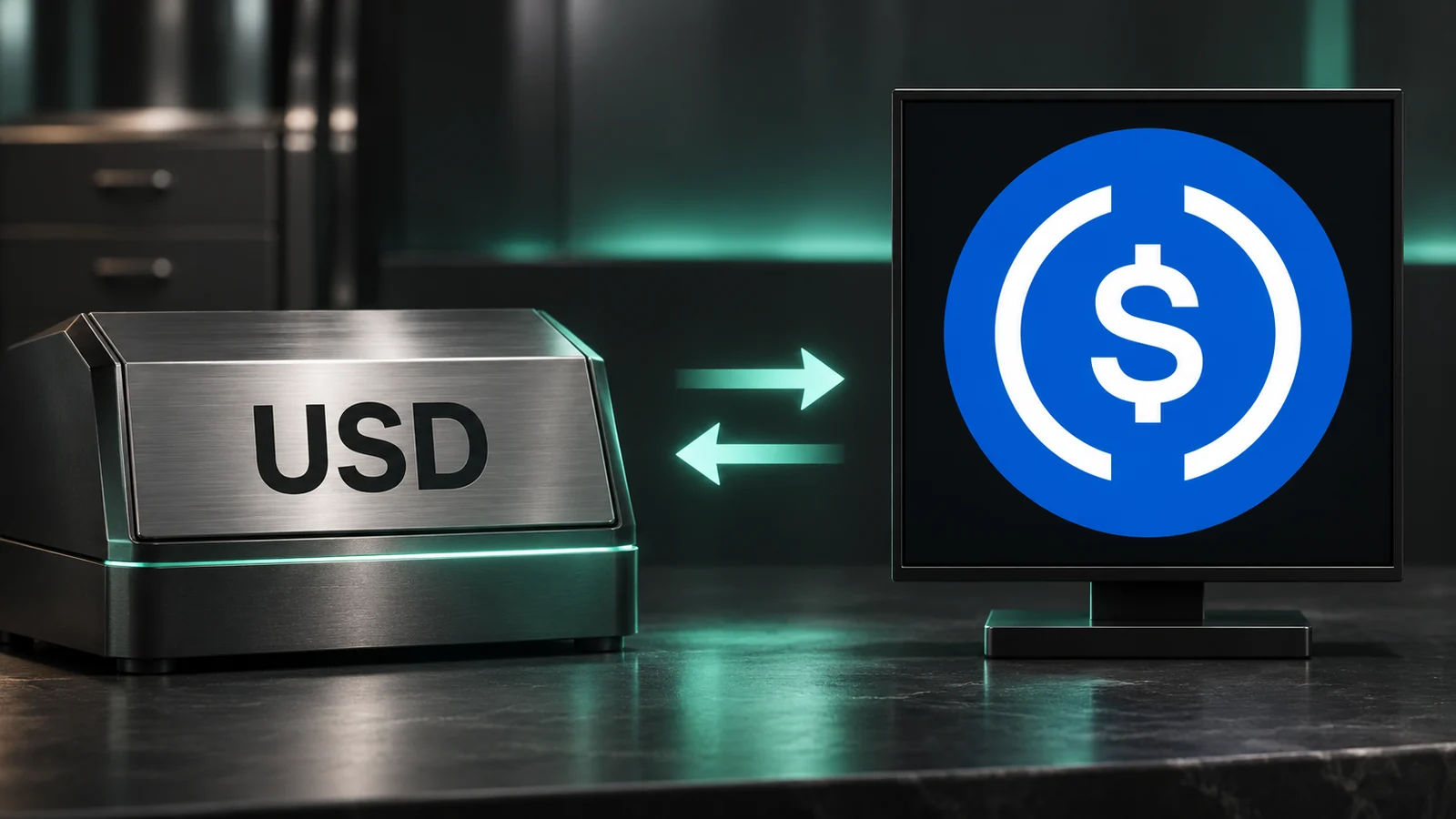
DBS and Circle announced on November 18 that eligible institutional clients will be able to convert U.S. dollars into USDC and redeem the stablecoin for dollars through DBS. The Singapore bank and the stablecoin company say the arrangement supports near-instant settlement for those conversions around the clock. It gives qualifying institutions another way to obtain or redeem USDC without matching a buy or sell order on an exchange.
The DBS announcement describes the service as part of a wider effort to expand institutional access to USDC in Asia. Circle’s announcement gives the same scope: eligible institutions, direct issuance and redemption, and round-the-clock settlement for the dollar-to-USDC conversion. Circle’s regulated affiliates issue USDC; DBS is the banking channel for this arrangement.
Issuing or redeeming USDC differs from trading it
Minting adds newly issued tokens to circulation. Redemption takes tokens out of circulation in exchange for dollars. An exchange trade, by contrast, can simply move existing USDC from a seller to a buyer. That trade depends on the offers available on that venue, and the price a buyer or seller can get may vary. As Reuters reported, the DBS arrangement gives qualifying clients a direct alternative to the secondary market.
Consider a treasury team that needs USDC for a settlement obligation over a weekend. If it is already eligible for the DBS service, the arrangement gives it another way to obtain the token from its dollar liquidity without first finding a seller. In the other direction, the team could use the redemption channel when it needs dollars rather than continuing to hold a token balance or selling on an exchange. The value to the team is control over when it can switch between the two balances, subject to the service’s terms.
The 24/7 promise applies to one part of a payment
DBS and Circle are describing settlement of the USD–USDC conversion through DBS. They are not saying that every payment after that conversion will settle in the same time. A separate blockchain transfer or a payout to an account at another bank involves its own network or provider. And if a recipient needs a currency other than U.S. dollars, currency conversion and local payout are separate steps.
The November 18 releases do not spell out the supported blockchains, country-by-country access, fees or transaction limits. Those details matter to an institution deciding whether its existing wallet and accounting processes can use the service. USDC exists on multiple networks, so a bank offering the token and a recipient being able to accept it on a particular network are different questions.
Why the distinction matters for stablecoin users
This announcement concerns institutional access to an existing stablecoin. That is different from the Samsung Wallet USDC rollout, which put consumer-facing features inside a wallet app, and from Invesco’s IROXX launch, which offered institutions a fund designed to serve as part of a stablecoin issuer’s reserves. A service can change how an institution acquires a token without changing the token’s backing or making the same service available to retail holders.
For now, the concrete change is the direct conversion route through DBS. Its usefulness for any particular payment depends on who qualifies, which networks the service supports and what the institution needs to do with the funds after conversion.